 Hairset
What a butterfly cut is
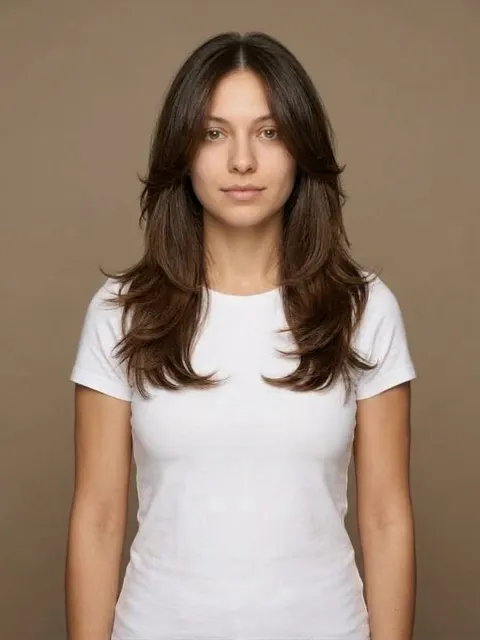
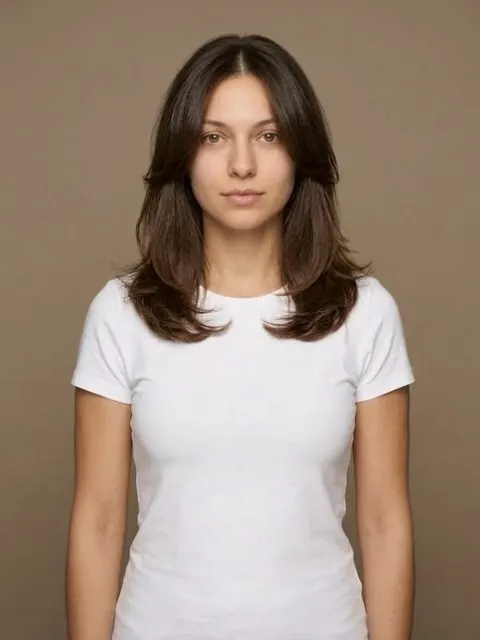
Two layer lengths working together. The top section, from the crown forward, is cut into short layers that start around the chin or cheekbone. The bottom section keeps your length, with longer layers cut through it. When you blow it out and flick the short layers away from the face, the shape spreads like wings. Hence the name.
It overlaps with face-framing layers, but goes further: face-framing layers only touch the pieces around the face, while a butterfly cut layers the whole top section. It’s also not a wolf cut, which is choppier and textured rather than smooth and bouncy.
Who it suits
It flatters oval, oblong, round and heart faces, because the short layers sit at the cheekbones and lift the face. On a round face, make sure the shortest layer starts below the cheekbone rather than at it, so the volume doesn’t add width.
Straight and wavy hair of medium to thick density is ideal. If your hair is very fine, all those layers can make the bottom look thin; ask for fewer layers through the length and keep the weight at the ends. Tight curls are better served by a cut designed for curls, like a shag cut on the curl.
The honest downside: this cut is built for a blowout. Air-dried, it looks like nice long layers. If you never pick up a round brush, a simpler layered haircut will give you the same everyday result for less money.
How to ask for a butterfly haircut
Styling it
- Volume mousse or a root-lift spray at the roots while hair is damp.
- Rough-dry to about 80 percent.
- With a large round brush, dry the short front layers away from your face, rolling them up and out.
- Dry the back under, then wrap the front layers in two or three large velcro rollers while you do your makeup.
No time? A large curling wand on the front layers only, twisted away from the face, gets most of the look in five minutes.
Upkeep
Every 8 to 10 weeks. The short layers grow first and drop the shape, so if you want to stretch it, ask for a quick trim of just the front between full cuts. Growing it out is easy: the short layers simply catch up and turn into long face-framing layers.