 Hairset
What face-framing layers do
They create a frame of shorter pieces on either side of the face, usually cut in a diagonal from short at the front to long further back. The rest of the hair stays as it is. Because they sit right next to your face, they change how your features read more than any other layer does: they can open up the eyes, lift the cheekbones or soften the jaw.
They’re the low-commitment version of curtain bangs and a subset of a butterfly cut, which layers the whole top of the head.
Where to start them, by face shape
| Face shape | Start the shortest piece at | Why |
|---|---|---|
| Round | Just below the chin | Creates a vertical line and slims the cheeks |
| Square | The jaw or slightly below | Softens the corners of the jaw |
| Oblong | The cheekbone | Adds width at the middle of the face |
| Heart | The chin | Adds fullness where the face narrows |
| Oval | Anywhere you like | Most proportions already work |
Not sure of your face shape? The face shape calculator gives you an answer in a couple of minutes.
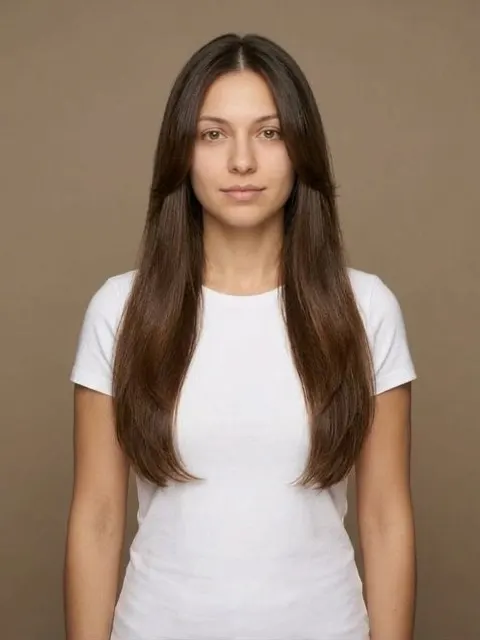
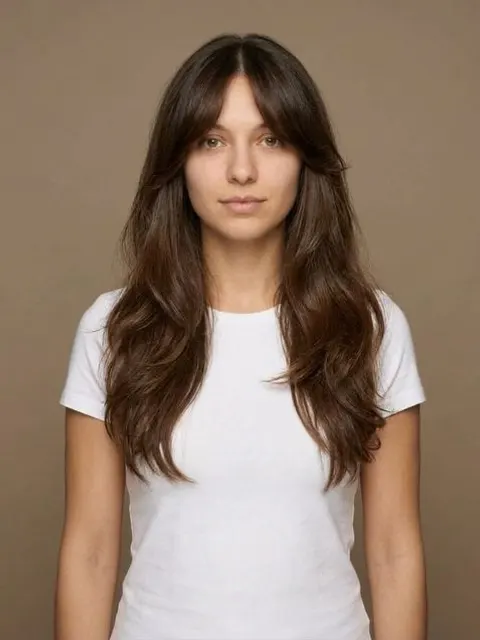
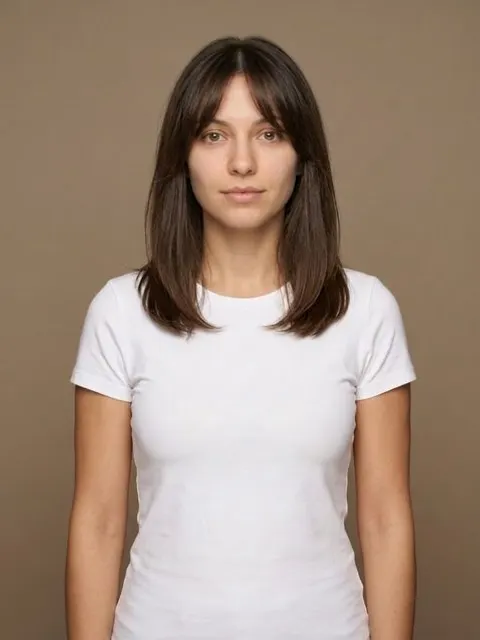
Texture notes
Straight hair shows face-framing layers clearly, so the angle should be smooth, not stepped. Wavy hair makes them look effortless. Curly hair needs them cut dry and a little longer than you think, because they’ll spring up, especially the short ones.
Very fine hair: keep the section narrow (just the hair right at the hairline), so you don’t take density out of the front.
How to ask for them
Styling
Blow-dry the front pieces away from your face with a round brush, or twist each side back around a large curling wand. On air-dry days, a small amount of light cream and a flat-iron flick at the ends is enough. Ask for a trim of the front every 6 to 8 weeks; many salons do it between full cuts.