 Hairset
First, figure out where you are
Barbers and doctors use the Norwood scale to describe male hair loss. You don’t need to memorize it, but knowing roughly where you sit helps you pick a cut that will still work in two years.
| Stage | What it looks like | What it means for your cut |
|---|---|---|
| Norwood 1–2 | A straight hairline, or slight rounding at the temples. A “mature hairline” in your 20s is normal. | Almost anything works. Most men here worry more than they need to. |
| Norwood 3 | Clear recession at the temples, forming an M or V shape. | Short sides, texture on top, forward styling. Skip slick-backs. |
| Norwood 3 vertex | Temples plus thinning at the crown. | Keep the top short and even so the crown doesn’t stand out. |
| Norwood 4–5 | Deeper temples and a thinning crown, with a band of hair between. | Very short crops, buzz cuts. Length makes the gaps louder. |
| Norwood 6–7 | Hair mostly around the sides and back. | Buzz or shave. Confidence does the rest. |
If you’re noticing a fast change, or it started suddenly, talk to a dermatologist. A haircut can change how it looks. It can’t change what’s happening underneath, and a doctor can tell you what your options are.
Why some cuts help and others don’t
Your eye goes to contrast. A receding hairline stands out when there’s a sharp edge between dense hair and bare temple, or when long hair on top makes the gaps look bigger by comparison. Good cuts for a receding hairline do three things:
- Shorten the sides. Less bulk on the sides means the top doesn’t look sparse next to it.
- Add texture on top. Choppy, point-cut ends break up the line of the hairline so the corners blur.
- Push hair forward or slightly to the side. It fills the space visually without trying to cover it.
The cuts that work best
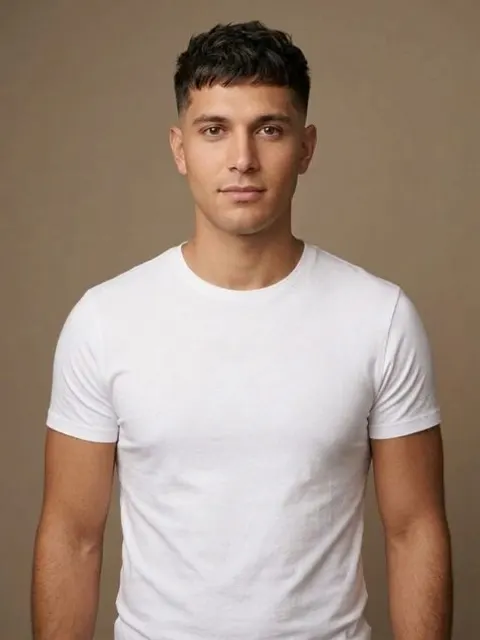

Textured crop
This is the cut most barbers will suggest at Norwood 2–3. About 1 to 2 inches on top, point cut so it looks choppy, pushed forward, with a low or mid fade. A little matte clay is all the styling it needs. If your hairline is mostly receding at the temples and still solid in the middle, this cut is close to perfect.
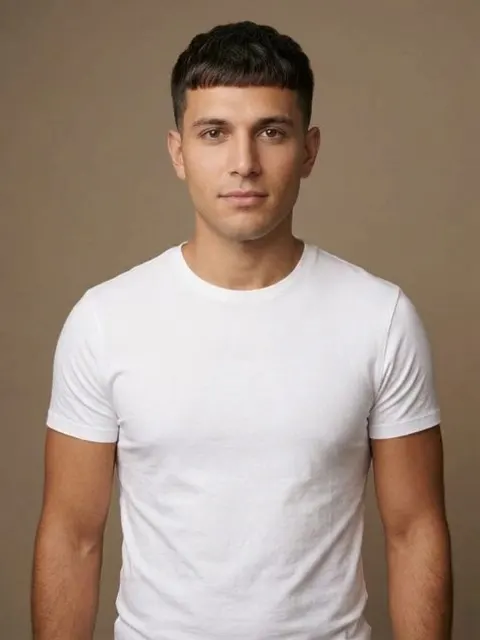
Crew cut and Ivy League
A crew cut keeps the top short and slightly longer at the front. It reads clean and deliberate, which is the opposite of “trying to hide something.” The Ivy League is the same idea with enough length at the front for a short side part.
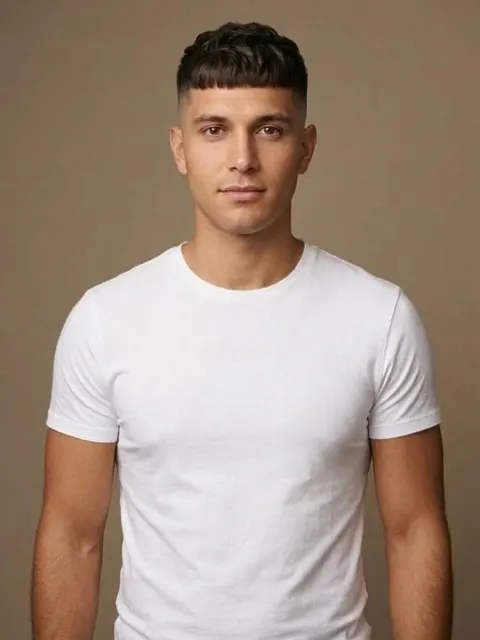
French crop
The French crop has a short, straight fringe across the forehead. On a receding hairline, ask for it textured rather than blunt. A heavy, perfectly straight line can show the gaps behind it. Good for Norwood 2–3 with decent density at the front.
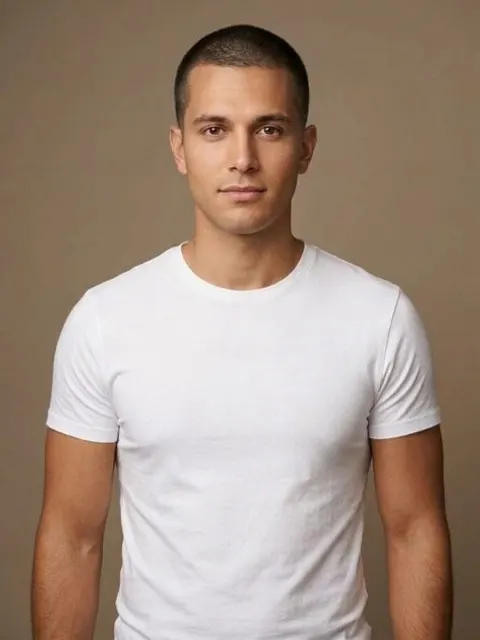
Buzz cut
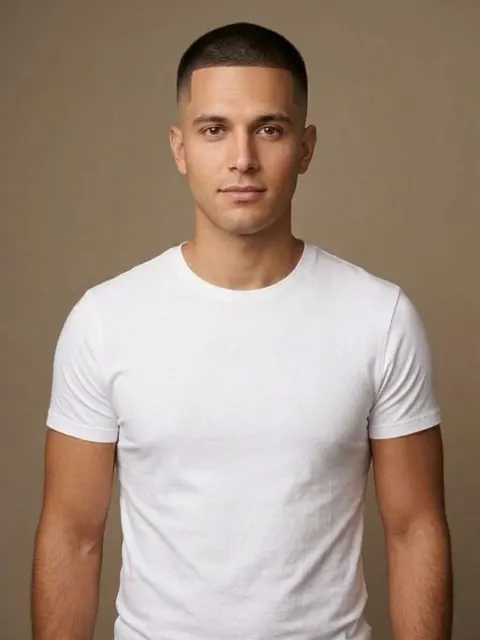
The buzz cut is the most honest option and often the best-looking one from Norwood 4 onward. A #2 or #3 all over keeps some shadow. Pair it with stubble and the jawline takes over as the focal point.

Short quiff and side part
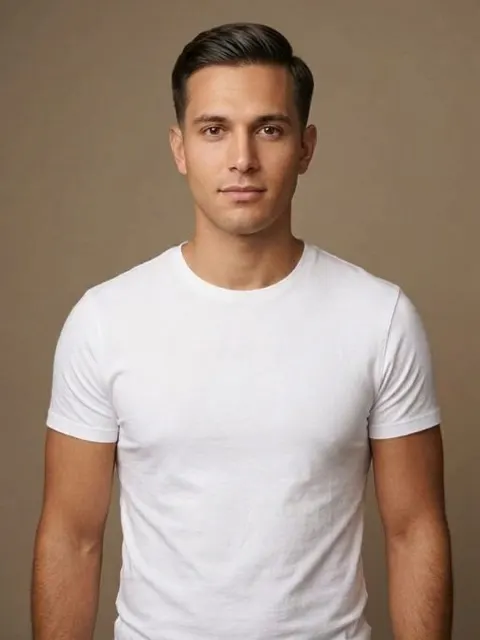
Both can work at Norwood 2 and early 3, with one rule: keep the length modest. A quiff with 3 inches of height pulls hair back and exposes the corners. A short, textured version doesn’t. For a side part, place the part low, roughly in line with the deeper temple, so the recession becomes part of the line.
What makes a receding hairline look worse
- Long slick-backs. Pulling everything back shows the full shape of the temples, sharply outlined.
- Heavy combed-forward fringes to cover it. They separate in wind, rain or sweat and draw attention exactly where you didn’t want it.
- Longer sides with a thinner top. Fullness on the sides makes the top look emptier.
- Very sharp hard parts or line-ups on the hairline. A crisp edge outlines the recession. Ask your barber to leave the front line soft.
- Thinning shears on already fine hair. Removing bulk makes the top look sparser.
Use your beard
A beard moves attention down. Heavy stubble or a short boxed beard adds weight to the lower face and balances a higher forehead, especially with a short cut or a buzz. Keep beard length and side length related: a #2 fade with a 2 cm beard looks planned. A skin fade with a full beard needs a faded beard to connect them.



More on shapes in our guide to beard styles for your face shape.
When to go short
If you spend more than a couple of minutes every morning arranging hair over a thin spot, it’s time to consider going shorter. Most men who make the switch say they wish they’d done it earlier. The fear is usually bigger than the result. Trying the buzz on your own photo first takes the guesswork out of it.
For women: thinning at the temples
Temple thinning in women often comes from tight ponytails, braids or buns worn over years, or from hormonal changes. A dermatologist can help you figure out which. For the cut itself:
- Soft face-framing pieces or curtain bangs cover the temples gently without weight. See curtain bangs.
- Side parts let hair fall across the thinner side.
- Loose styles instead of tight high ponytails reduce tension on the hairline.
- Avoid very slicked-back looks, which show the full hairline.