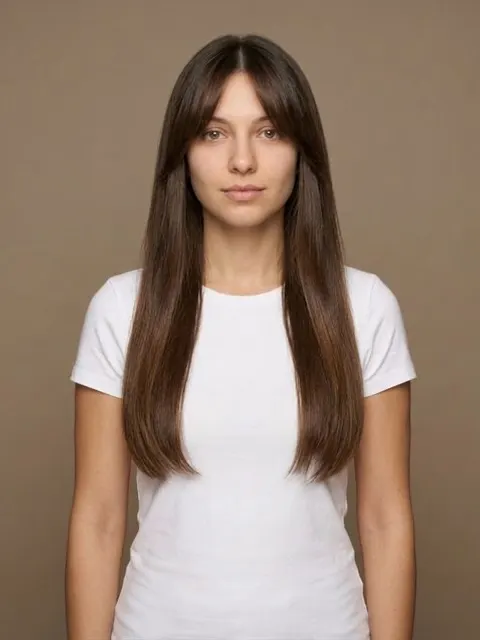
Types of bangs: every fringe, and which face it suits
A fringe changes your face more than any other cut, for the price of a few inches. The trick is picking a type that suits your face and your hair, then being honest about how much time you’ll spend on it.
The last two in the catalog are really ways to wear a fringe: a deep side fringe, swept heavily across from a low part to soften a strong jaw or forehead, and bangs with a sleek high pony, which looks polished and playful at once.
If you have a high forehead, see our guide to haircuts for a big forehead: a fringe is usually the first answer.
Hair texture and cowlicks
Straight hair takes any fringe. Wavy hair suits wispy, curtain and choppy bangs; heavy blunt bangs need daily straightening. Curly and coily hair should get bangs cut dry, on the curl, and left longer than the target length. A strong cowlick at the front hairline is the main reason to avoid blunt and micro bangs: they’ll stand up. Side-swept or curtain bangs can work with it instead of against it.
How to ask for bangs
Questions people ask
What type of bangs is easiest to maintain?
Curtain and long curtain bangs, followed by wispy and bottleneck bangs. They grow out without an awkward phase.
What bangs are best for a round face?
Side-swept, long curtain and arched bangs, which create diagonal or vertical lines. Short blunt bangs add width.
Can you have bangs with curly hair?
Yes. Get them cut dry on the curl and left longer, because curls spring up after drying.
How often do you need to trim bangs?
Blunt and micro bangs every 2 to 3 weeks; curtain and wispy bangs every 4 to 6 weeks.
 Hairset