 Hairset
The one rule behind every beard choice
A beard is a frame. Length at the chin makes a face look longer. Fullness at the sides makes it look wider. Keeping the cheeks tight and the chin longer slims a wide face; keeping the chin short and the sides full softens a long one.
Everything below is that rule applied to each face shape. If you’re not sure which shape you have, use the face shape calculator first. It takes a minute and a mirror.
Oval face
Balanced proportions, so almost anything works. The main risk is hiding a good jawline under too much hair. Short to medium styles that follow the jaw keep the shape you already have.



More on haircuts for an oval face.
Round face
Width and length are similar, with soft angles. You want length at the chin and tight sides. Pointed and tapered shapes draw the eye down and make the face look longer. Avoid round, bushy cheeks, which add width exactly where you don’t want it.




More on haircuts for a round face.
Square face
A strong, wide jaw with straight sides. You have two good options: show it off with stubble or a short beard with crisp lines, or soften it with a bit of length at the chin and slightly rounded corners. What you want to avoid is a wide boxy beard that makes the jaw look even wider.




More on haircuts for a square face.
Heart face
Wider forehead and cheekbones, narrow pointed chin. A beard is your friend here: fullness at the jaw and chin balances the width up top. Avoid goatees and pointed styles, which make a narrow chin look narrower.


More on haircuts for a heart-shaped face.
Oblong face
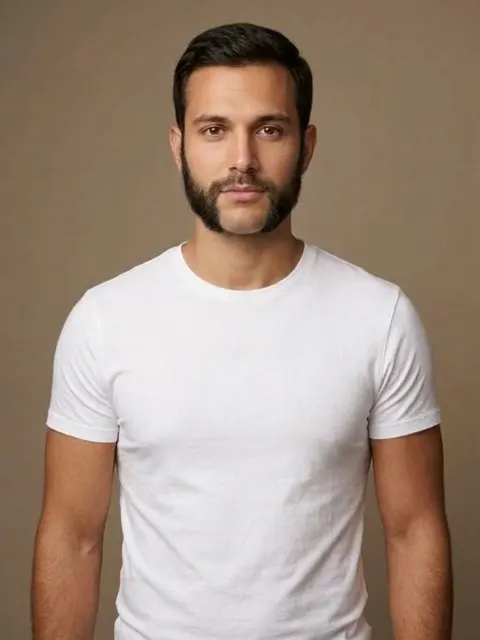
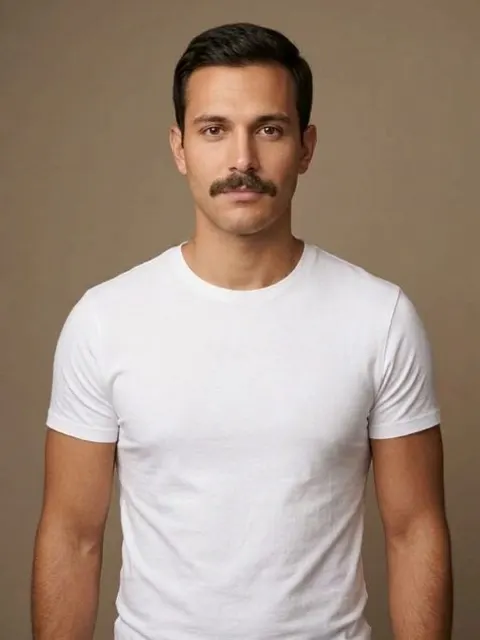
Longer than it is wide. The fix is the opposite of a round face: fuller at the sides, shorter at the chin. Avoid long pointed beards and goatees, which add length you don’t need.

More on haircuts for an oblong face.
Diamond face
Wide cheekbones, narrow forehead and narrow chin. You want fullness at the chin and jaw to balance the cheekbones, with the cheek line kept low and natural.

More on haircuts for a diamond face.
Quick reference
| Face shape | Grow | Skip |
|---|---|---|
| Oval | Stubble, short boxed, medium full | Very long beards that hide the jaw |
| Round | Goatee, Van Dyke, ducktail, tapered | Bushy cheeks, round full beards |
| Square | Stubble, circle beard, anchor, short with sharp lines | Wide boxy beards |
| Heart | Full beard, Balbo, medium full | Goatees and pointed shapes |
| Oblong | Full sides with a short chin, mutton chops, mustache | Long pointed beards, goatees |
| Diamond | Full beard, Garibaldi, long groomed | High, tight cheek lines |
Neckline and cheek line: where most beards go wrong
The shape of the beard matters less than where it stops. Two lines decide whether a beard looks groomed or neglected.
- The neckline. Put two fingers above your Adam’s apple. That’s roughly where the beard should end; shave everything below it. A neckline cut too high, tight under the jaw, is the most common mistake, and it makes the face look heavier.
- The cheek line. Follow your natural line and only clean up the stray hairs above it. Pushing the line down too far makes the beard look drawn on. A slightly lower line slims a round face; a natural or higher line suits a long one.
- The mustache. Trim it so it doesn’t cover your upper lip. It’s the part people see most when you talk.
Give it 4 to 6 weeks before you judge
Every beard looks rough at two weeks. Hairs grow at different speeds and in different directions, and the itch peaks around week two or three. Most beards only show their real density and shape after four to six weeks. Resist the urge to trim the shape until then; only tidy the neckline.
Patchy beard? Work with it
- Keep it short. At 3 to 5 mm (heavy stubble), gaps disappear. Longer hairs make the patches more visible next to them.
- Let the longer areas cover the gaps. On many patchy beards, slightly longer hair on the jaw falls over thin cheeks.
- Choose a style that skips the weak area. If your cheeks are thin, a goatee, Van Dyke or anchor puts the beard where it grows well.
- Brush it daily. Brushing trains hairs to lie in one direction, which covers more skin.
- Be patient. Beard density often keeps filling in through your twenties and into your thirties.