 Hairset
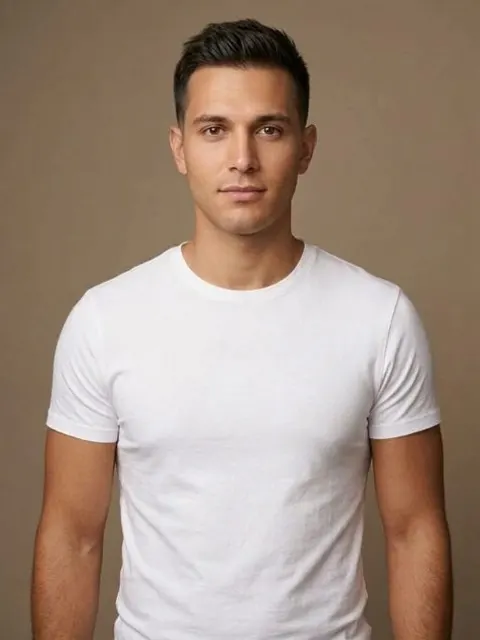
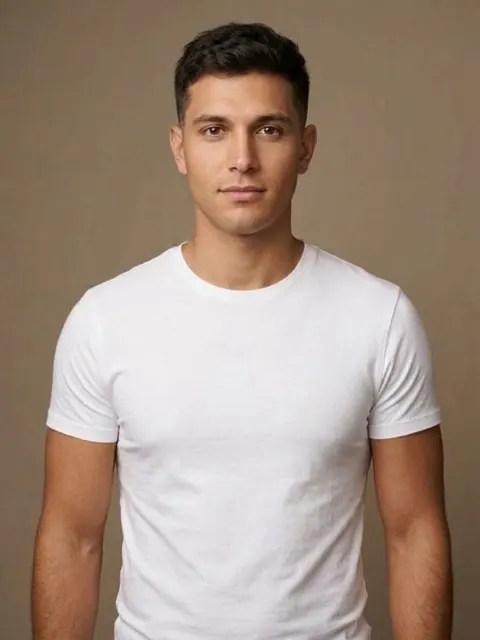
It’s often confused with a buzz cut. The difference is the top: a buzz is one length everywhere, while a crew keeps an inch or so at the front. That gives the face a bit of height and lets you push the front up or to the side.
The crew cut family
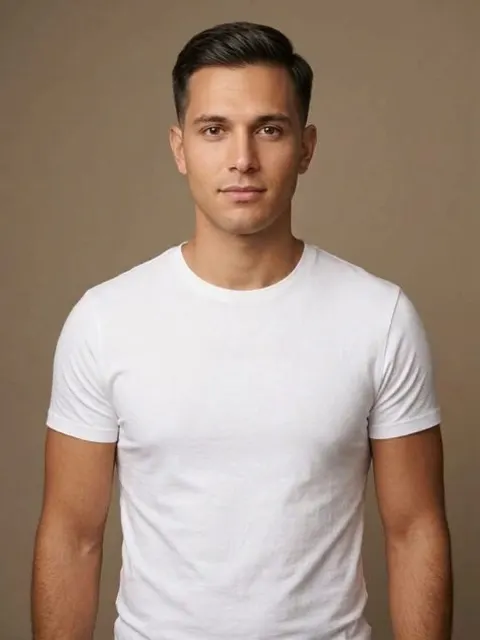
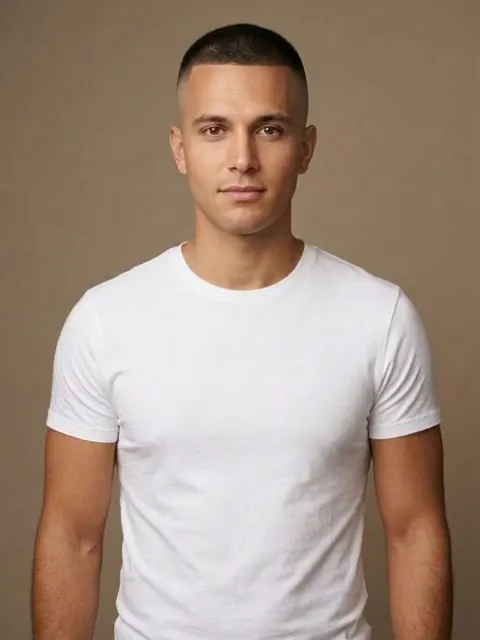
Most classic short men’s cuts are really crew cuts with different amounts left on top.
| Cut | Top length | Difference |
|---|---|---|
| Crew cut | 1 to 1.5 in (2.5 to 4 cm) | The baseline. Front pushed up or slightly forward. |
| Ivy League (Harvard clip) | 1.5 to 2.5 in (4 to 6 cm) | Long enough to part and comb to the side. |
| Princeton | About 1.5 in | A slightly longer, softer crew. The names overlap. |
| High and tight | Under 1 in | Sides clipped very high and very short. Closest to the military original. |
Who it suits
Nearly everyone, which is rare. The graduated top adds a little height, so it helps a round face, and because it isn’t long it doesn’t drag down an oblong one. It’s best on straight and wavy hair. Curly and coily hair can wear it, but curls shrink, so your barber will leave more on top and the result looks closer to a curly top fade (see the types of fades).
It’s also kind to a hairline that’s starting to recede. Short hair at the front hides the corners better than a longer cut that separates and shows them.
How to ask your barber
If you want it sharper, ask for a low or mid fade on the sides instead of a #2. It’s the same crew cut with more contrast, and it needs touching up more often.
Styling
You barely need to. Towel-dry, work a small dab of matte paste or light cream through the front, and push it up and slightly to the side. For an Ivy League, comb in a side part while it’s damp and use a little cream or low-shine pomade to hold it.
Upkeep and growing it out
Every 3 to 4 weeks keeps the shape. Grown out, a crew turns into an Ivy League, then into a side part or a quiff. There’s no awkward stage, which is one more reason barbers recommend it to anyone unsure about short hair.